Why is Male Competition Absent in Some Bird Species Explained
Have you ever wondered why some male birds don’t fight for attention like others do? You might expect fierce battles and flashy displays, but in certain bird species, male competition is surprisingly missing.
Understanding why Male Competition Absent in Some Bird Species is essential for wildlife enthusiasts.
This unusual behavior challenges what you think you know about nature and animal instincts. Understanding why male competition is absent can change the way you see relationships, survival, and even your own competitive instincts. Keep reading to discover the surprising reasons behind this peaceful approach in the bird world—and what it reveals about nature’s smartest strategies.
This exploration of why Male Competition Absent in Some Bird Species reveals fascinating insights into evolutionary strategies.
Male Competition In Birds
Male birds often compete to attract females. This rivalry can shape their behavior and appearance.
In contrast, some species have a unique dynamic where Male Competition Absent in Some Bird Species fosters collaboration.
Some species show little or no male competition. Understanding why helps us learn about bird diversity.
Researching Male Competition Absent in Some Bird Species can enlighten us about environmental adaptations.
Typical Male Rivalry Patterns
Many bird species have males that fight or display to win mates. These patterns vary widely across species.
- Physical fights with other males
- Colorful feathers to attract females
- Loud songs to mark territory
- Building nests to impress mates
Role In Mating Success
Male competition often increases the chance of mating. Strong or dominant males usually get more opportunities.
| Competition Type | Effect on Mating |
| Physical fights | High success for winners |
| Display and songs | Attracts females without fighting |
| No competition | Other factors affect mating |
Species Without Male Competition
In some bird species, male competition for mates is missing. This means males do not fight or show off to win females.
The concept of Male Competition Absent in Some Bird Species challenges established notions about animal behavior.
Scientists study these species to understand why male rivalry is absent. It helps us learn about different animal behaviors.
Examples Of Non-competitive Species
Some bird species show little or no male competition. These species often live in unique environments or have special mating systems.
Examples of Male Competition Absent in Some Bird Species include species with unique breeding systems.
- Emperor Penguins: Males take turns caring for eggs without fighting.
- Wilson’s Phalarope: Females compete, males choose partners.
- Jacanas: Females control territory, males care for young.
- Monogamous Songbirds: Males and females pair for life with no fights.
Behavioral Traits Observed
Birds without male competition show unique behaviors. These traits help reduce conflict and support family care.
Understanding traits linked to Male Competition Absent in Some Bird Species can help us appreciate their unique survival strategies.
- Shared Parenting: Males help raise chicks instead of fighting.
- Female Dominance: Females may choose mates or control territory.
- Cooperation: Birds work together rather than compete.
- Monogamy: Stable pairs form with less rivalry.
Ecological Factors Influencing Competition
Male competition in bird species changes depending on the environment. Some birds show little or no fighting among males. This often links to the conditions where they live.
In environments where Male Competition Absent in Some Bird Species is observed, social structures play a key role in success.
Two main ecological factors affect male competition: how resources are spread and how stable the habitat is. These shape bird behavior and social structures.
Resource Availability
When food and nesting spots are easy to find, males do not fight as much. They do not need to compete hard for these resources. This lowers aggression and competition.
-
- Plentiful food means sharing is easy.
- Many nesting sites reduce fights for territory.
This is particularly true in areas where Male Competition Absent in Some Bird Species allows for peaceful coexistence.
-
- Resources spread out reduce encounters between males.
These traits lead to a society where Male Competition Absent in Some Bird Species is the norm, not the exception.
- Less competition saves energy for other activities.
Habitat Stability
Stable habitats support peaceful male interactions. Birds stay in one place for long periods. This makes constant fighting unnecessary.
| Habitat Type | Competition Level |
| Stable Forest | Low |
| Changing Wetlands | Medium |
| Open Grasslands | High |

Credit: onlinelibrary.wiley.com
Understanding the implications of Male Competition Absent in Some Bird Species provides insights into ecological balance.
Social Structures Reducing Rivalry
Some bird species show little or no male competition. This absence often links to their social structures. These structures help lower rivalry among males.
Understanding these social systems sheds light on how cooperation and bonds shape bird behavior. Two key social setups are cooperative breeding and monogamous pair bonds.
Cooperative Breeding
In cooperative breeding, several birds help raise young together. Males often work as a team rather than compete. This group effort reduces fighting for mates.
-
- Multiple males assist in feeding chicks
- Shared territory lowers need for fights
Such cooperative behavior is a hallmark of Male Competition Absent in Some Bird Species.
- Group living creates strong social bonds
- Helpers gain indirect benefits from offspring survival
Monogamous Pair Bonds
Many birds form long-term monogamous pairs. This bond limits male rivalry over mates. Both partners focus on raising their young together.
| Feature | Effect on Rivalry |
| Exclusive mating | Reduces competition |
| Shared parenting | Builds cooperation |
| Stable territory | Limits male challenges |
| Strong pair bonds | Encourages loyalty |
Evolutionary Benefits Of Reduced Competition
Some bird species show little or no male competition. This behavior has clear evolutionary benefits. It helps males save energy and increases the chances of their offspring surviving.
Ultimately, the absence of Male Competition Absent in Some Bird Species can lead to stronger offspring care.
Understanding these benefits helps explain why some species evolve this way. Reduced competition can lead to better care for young birds and stronger family bonds.
Energy Conservation
Male birds that avoid fighting save a lot of energy. They spend less time and effort on battles for mates or territory. This energy can be used for other important activities like finding food and protecting nests.
- Less risk of injury from fights
- More time to gather food
- Better ability to guard the nest
- Reduced stress and fatigue
Improved Offspring Survival
When males do not compete, they often help more with raising young. This teamwork helps chicks grow stronger and survive longer. Parents can feed and protect their babies better.
In conclusion, the concept of Male Competition Absent in Some Bird Species is vital for understanding avian dynamics.
| Benefit | Effect on Offspring |
| Shared nest guarding | Protects chicks from predators |
| Joint feeding | Ensures chicks get enough food |
| Less disturbance | Creates a calm environment for growth |
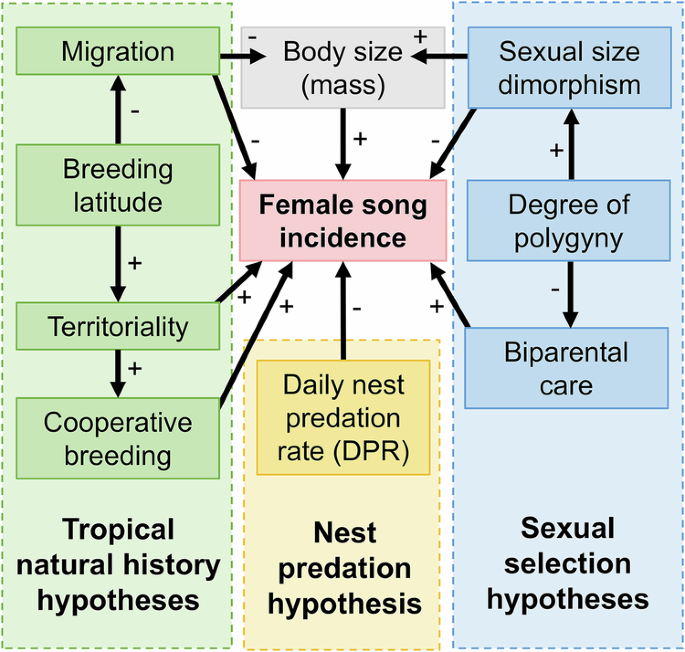
Credit: www.nature.com
Hormonal And Genetic Influences
Some bird species show little or no male competition during mating. This lack of rivalry is linked to hormones and genes. These factors shape how birds behave and interact.
Understanding hormones and genetic differences helps explain why some male birds do not compete aggressively for mates.
Role Of Hormones In Aggression
Hormones like testosterone control aggression in many animals. In birds, high testosterone often leads to more fighting among males.
Some species have low testosterone levels during mating seasons. This reduces male aggression and competition for females.
- Low testosterone means less fighting
- Other hormones, like corticosterone, can lower aggression
- Hormone balance affects how males behave around rivals
Genetic Variations Affecting Behavior
Genes influence how birds act, including their social behaviors. Some genetic traits reduce the need for males to compete.
In species with shared parenting, genes promote cooperation instead of fighting. These birds may share resources and mates peacefully.
- Genetic differences can lower male aggression
- Cooperative genes support group living and mating
- Behavior genes vary widely across bird species
Case Studies And Research Findings
Male competition is common in many bird species. It helps males gain mates and defend territories. Yet, some bird species show little or no male competition. Scientists have studied these cases closely.
Research reveals why some males do not compete. This can depend on food supply, mating systems, and social structure. Studies give us clear examples and surprising results.
Notable Research On Competitive Behavior
One famous case is the white-throated dipper. Males of this species show low aggression and little fight for territories. Scientists link this to the abundance of food and stable river habitats.
- Food is easy to find, so males do not need to fight.
- Females choose mates based on territory quality, not fights.
- Cooperation among males helps protect nests from predators.
Another study focused on the purple-crowned fairy-wren. Here, males sometimes help their relatives rather than fight for mates. This behavior reduces competition inside the group.
Surprising Discoveries In Bird Species
| Species | Male Competition Level | Reason for Low Competition |
| White-throated Dipper | Low | Food abundance and stable habitat |
| Purple-crowned Fairy-wren | Low | Cooperation among relatives |
| Emperor Penguin | Minimal | Harsh environment limits fights |
In emperor penguins, males do not fight to win mates. They face cold and harsh weather. Males focus on keeping eggs warm and helping females. This need reduces competition.
These studies show that male competition is not always needed. Food, family ties, and environment shape behavior. Birds adapt their actions to survive and reproduce well.
This realization emphasizes that Male Competition Absent in Some Bird Species is a key aspect of their survival strategy.

Frequently Asked Questions
Why Is Male Competition Missing In Some Bird Species?
Male competition is absent where resources are abundant and evenly distributed. This reduces the need to fight for mates or territory, leading to cooperative or solitary behaviors instead of rivalry.
How Does Environment Affect Male Competition In Birds?
Stable environments with plentiful food and nesting sites lower male competition. In such habitats, males do not need to compete aggressively, promoting peaceful coexistence and shared parenting roles.
Do Mating Systems Influence Male Competition In Birds?
Yes, monogamous systems often reduce male competition. When pairs form strong bonds, males invest more in parenting than fighting rivals, minimizing competitive behaviors.
What Role Does Female Choice Play In Male Competition?
Female choice can lessen male rivalry if females prefer cooperative traits. When females select mates based on cooperation or parental care, males focus less on competition and more on partnership.
Conclusion
Male competition is absent in some bird species for various reasons. Resource availability plays a key role. When food is plentiful, competition decreases. Some birds form strong pair bonds. This reduces the need for male rivalry. Environmental factors also influence behavior.
Furthermore, the dynamics of Male Competition Absent in Some Bird Species highlight the importance of environmental factors.
Harsh conditions favor cooperation over competition. Each species adapts to its unique surroundings. These adaptations ensure survival. Observing these birds offers insights into nature’s complexity. Understanding their behavior enriches our knowledge. It highlights the diversity of life. Such diversity fascinates bird enthusiasts worldwide.
The phenomenon of Male Competition Absent in Some Bird Species enriches our understanding of biodiversity.
It reminds us of nature’s balance and beauty.
At the core of this is the intriguing question: why is Male Competition Absent in Some Bird Species?