Creating a Healthy Sanctuary: Professional Bird Cage Decor Ideas for Every Species
A bird’s cage is its universe. While humans view a house as a series of rooms, an intelligent parrot or a high-energy finch views their cage as an ecosystem of functional zones. Modern avian research emphasizes that the way you organize this space impacts more than just visual aesthetics; it determines your pet’s orthopedic health, psychological stress levels, and daily exercise capacity. When looking for effective Bird Cage Decor Ideas, owners must balance enrichment with easy maintenance and absolute safety.
Providing a textured environment reduces the risk of repetitive behaviors and foot issues. Even a standard metal frame can become a high-impact enrichment zone through the thoughtful application of heights, textures, and activities. Whether you are welcoming your first budgie or seeking to revitalize a decades-old African Grey habitat, understanding how to decorate a bird cage using science-based principles will help ensure your pet thrives.
Quick Recommendation Summary: Best Habitat Components
| Feature Category | Top Selection | Key Benefit | Ideal Species |
| Foundation Support | Dragonwood Branch Perches | Best for preventing arthritis | All Medium/Large Parrots |
| Interactive Zone | Prevue Natural Sisal Ropes | Encourages balance and play | Conures & Cockatiels |
| Vertical Access | Polished Natural Ladders | Aids seniors and young birds | Budgies & Finches |
| Sensory Texture | Bamboo Foraging Mats | Redirects destructive chewing | All Species |

Understanding Avian Foot Orthopedics: The Structural Foundation
If your bird spends their life standing on perfectly uniform, 1-inch wooden dowels, they will likely develop a painful condition called bumblefoot (pododermatitis). The primary structural requirement of any habitat is diameter variety. Using a range of textures ensures that pressure is not consistently localized on the same point of the foot pad.
Integrating Natural Branches
Authentic natural wood perches are arguably the single most important purchase for a bird’s physical infrastructure. These perches offer uneven circumferences that force the tendons and muscles in the foot to remain flexible. Evidence-based care guidelines suggest rotating perches monthly so the bird never becomes complacent in their movements.
Beyond standard wood, you should incorporate varying materials. Hardwoods like manzanita or coffee wood offer long-term durability against heavy chewers. Softer fruitwoods like apple provide a scent and texture that many smaller birds find interesting. The goal of using these high-quality bird cage accessories is to mimic the biological complexity found in a natural canopy.
Identifying Secure Placement
Placing perches requires strategy. A common error is “crowding the air.” If perches are placed directly in the center, they block the flight path and prevent the bird from fanning its wings. A professional finch cage setup, for example, places perches at the extreme ends of the cage, forcing the bird to fly across the horizontal gap, which is essential for cardiovascular fitness.
Species-Specific Logic: Mapping Your Layout
A single strategy rarely works for all birds. Foot strength, beak pressure, and psychological habits change based on whether the bird is a desert dweller or a tropical rainforest species. Your decision matrix should be tailored to the bird’s inherent survival instincts.
Developing an Effective Budgie Cage Design
For parakeets, focus should be on horizontal mobility and frequent surface interaction. Because these birds are smaller, the wire gauge must be fine enough to prevent escape, and the toys should be scaled to prevent fear responses. A thoughtful budgie cage design includes many landing platforms and varied vertical ladders.
Owners frequently discover that parakeets prefer sleeping on the highest point available. For this reason, ensure the “high corner” has a flat, comfortable wooden shelf rather than a thin swinging perch to encourage a deeper night’s rest. For birds that have high activity levels, these types of bird toys and accessories should be grouped away from the center to maximize flight room.
Structuring a Sustainable Parrot Cage Setup
Large parrots like African Greys or Amazons require a heavier physical infrastructure. They spend much of their time using their beaks as a “third hand” for climbing. A professional parrot cage setup emphasizes thick metal components and “destroyable” wood elements that serve as an outlet for high beak pressure.
When considering a setup for an intelligent parrot, “zoning” is critical. One area of the cage should be for food and water, another for foraging (hiding seeds inside cardboard or wood blocks), and a third quiet area for resting. If the cage lacks horizontal bars, adding vertical bird safe branches secured firmly with metal washers allows these larger birds to climb between tiers safely.
Botanical Enrichment: Safety with Indoor Greenery
Plants provide more than just decoration; they offer a sense of security through “foliage cover.” However, the risks of plant ingestion are significant, as many common houseplants (like Philodendron or Poinsettia) contain toxic oxalates.
Sourcing Safe Plants for Bird Cages
Living vegetation can improve indoor air quality and stimulate preening behavior. When searching for safe plants for bird cages, consider species like Bromeliads, Boston Ferns, and Parlor Palms. These are non-toxic if accidentally sampled by a curious beak.
For a long-lasting aesthetic, consider attaching the plant to the outside of the bars so the leaves peak through, providing shade without the bird being able to soil the soil or pull up the roots. Always verify that any nursery-bought plant has not been treated with systemtic pesticides, which remain in the leaves and are deadly to birds. This level of transparency in plant care is a core component of healthy Bird Cage Decor Ideas.
Aesthetic Integration: Beyond Traditional Function
Some cages exist solely for home styling or for short-term events like weddings or historical displays. If the enclosure will not house a living animal, the decor choices expand considerably into high-design artifacts.
Exploring Vintage Bird Cage Decor
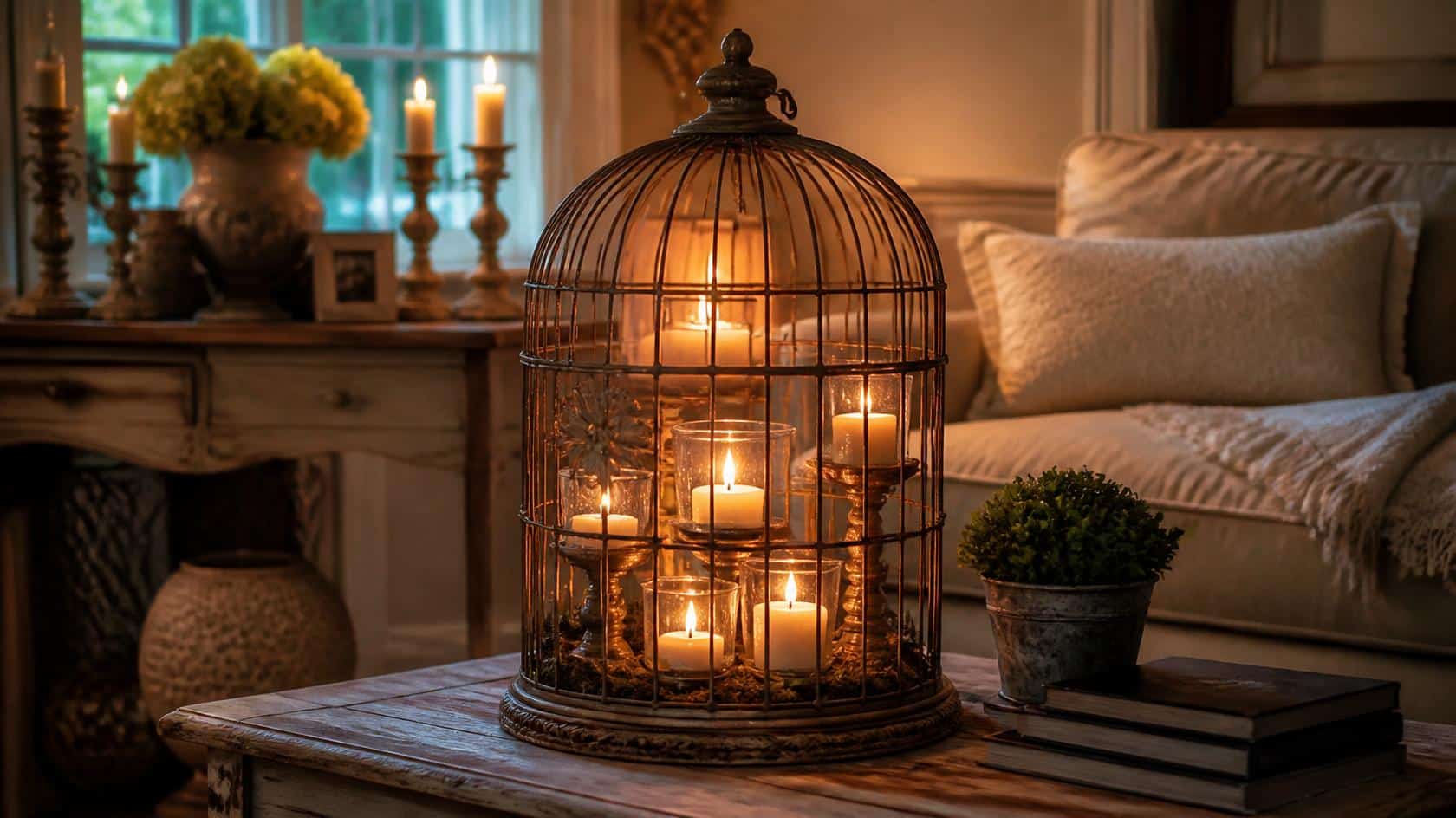
A traditional metal shell often creates a striking architectural shadow in modern homes. Using vintage bird cage decor involves filling the shell with fairy lights, stacks of antique books, or tiered floral arrangements. These cages are sculptural assets that bring a “European cottage” vibe to empty corners or mantels.
Because these units often feature old lead-based paint or narrow openings not meant for birds, they should never be repurposed for housing living pets. If you find one at a local market, its primary value is aesthetic verticality. Using silk flowers or trailing ivy inside these shells represents a common way to enjoy the classic shape of an aviary without the logistical responsibilities of pet ownership.
Technical Factors: Building Safe Layouts
Stability is the foundation of confidence for a bird. If a toy or perch “gives way” or vibrates when a bird lands on it, the bird will eventually refuse to use that area, resulting in an “atrophied” layout where only half the cage is utilized.
Detailed Review of Structural Security
-
Wing Nut Tension: Every branch or platform must be secured from the exterior with heavy washers. If the hardware is loose, the metal can “rub” and flake, which birds may ingest.
-
Bar Alignment: If the cage has only vertical bars, birds have a much harder time climbing up. You must use horizontal ladders or ropes to bridge these gaps.
-
Eye Level Logic: For highly timid birds, a “too tall” cage where the bird looks down on you can lead to aggressive guarding. For extremely bold birds, a layout that sits at your chest level helps ground them and keeps them focused on interaction.
Applying a consistent strategy regarding bird cage layout ideas requires regular monitoring. Observe where your bird poops; if one perch is constantly covered in debris from the perch above it, you have a structural alignment problem that can lead to bacterial foot infections. Keeping “sleeping perches” separated from “eating zones” is a key technical goal of anyone researching how to decorate a bird cage effectively.
Practical Ownership: The Maintenance Dimension
No design is successful if it takes two hours to sanitize every Saturday. High-utility layouts facilitate quick cleanup.
Debris Control Zoning
Food and water should ideally be near the bottom center of the cage, or if using a stand, adjacent to the exterior access doors. Avoid placing toys or ropes directly over these bowls. Debris and bacteria fall straight down. A “sanitary stack” means nothing occupies the air directly above your bird’s food supply.
The “Washability” Check
When buying components, prioritize high-gloss powder coats or polished woods that don’t absorb bird dust instantly. Professional bird cage accessories that feature “press-fit” construction allow you to pull a branch out, rinse it in a vinegar-and-water solution, and snap it back into place in seconds.
DIY Creative Solutions: Safe Habitat Crafting
Creating your own accessories can significantly lower ownership costs while providing a personalized feel to your habitat. However, materials must be strictly audited.
Designing Secure DIY Bird Cage Decorations
For those who are handy with a saw and drill, DIY bird cage decorations offer a way to create unique forking systems that mass-manufactured brands cannot duplicate. Using a low-power pressure washer is an excellent way to clean local, pesticide-free tree branches.
Acceptable materials for home crafting:
-
Untreated Balsa Wood: Great for small chewing toys.
-
Vegetable-Tanned Leather: Excellent for durable hanging strings.
-
Hemp or Sisal: The safest rope varieties (avoid cotton ropes if your bird ingests fibers).
-
Food-Grade Polypropylene: For making durable plastic beads.
Before introducing a handcrafted branch into the habitat, bake the wood in an oven at 200 degrees Fahrenheit for two hours. This neutralizes any hidden wood-boring pests or bacteria from wild birds that may have sat on the branch in nature.
Decision Matrix: Choosing the Right Theme for Your Bird
| Home Aesthetic | Primary Habitat Benefit | Top Priority Ingredient | Best Choice for Owners |
| Naturalistic / Forest | Sensory enrichment through smell/touch | Foraged branches / Moss layers | For active explorers (Conures) |
| Modern / Minimalist | Highest sanitization standards | 304 Stainless steel perches | For busy professionals |
| Active Playground | Maximal physical exercise | Ropes, Ladders, Boings | For high-energy breeds (Macaws) |
| Cozy Nursery | Soft landings and security | Fleece shelters & wide perches | For senior or juvenile birds |
Comparative Performance Analysis: Natural vs. Artificial Toys
Evidence indicates that “consumable” toys are more effective than permanent metal ones for redirecting bird aggression.
Shredders vs. Solids
A permanent plastic mirror may seem like a high-value item, but it often leads to psychological confusion for single parrots. In contrast, a wooden “shredder” block that can be torn apart satisfies a bird’s biological job. Our research suggests that at least 50% of the bird toys and accessories inside the enclosure should be made of “sacrificial” materials (shredded paper, soft wood, corn husks).
Buying Guide for Enriching Habitat Accessories
When shopping, move beyond the price tag and evaluate the physical consequences for your bird. Use this framework to make the right transaction.
1. Verification of Safe Materials
Never buy components made of galvanized metal, as it contains zinc, which can lead to slow poisoning if chewed. Prioritize stainless steel or nickel-plated steel for all links, washers, and bells. The “heavy metal” status of your habitat components determines the bird’s future blood work at the veterinarian.
2. Diameter Scaling
The rule of thumb for any parrot cage setup is that the bird’s foot should wrap roughly two-thirds of the way around the perch. It should never wrap so far that the front and back nails meet on the bottom, as this leads to claw injury and cramping. A quality store provides precise measurements for their perches to ensure they are compatible with your specific species.
3. Vertical Integration Logic
Birds are three-dimensional flyers but two-dimensional walkers. They need “paths” to move from the food bowl back up to their highest sleeping point. If you see your bird hopping more than six inches down from a perch to reach a tray, the risk of a “night fright” injury increases. Ensure ladders are angled rather than purely vertical to facilitate safer elderly-bird mobility.
Essential Considerations Checklist
Before finalizing your layout, ask:
Is there enough clear space in the center for my bird to do 5-10 wing flaps without hitting their primary perches?
Are any natural materials sources from pesticide-free areas?
Does the high sleeping perch feel secure and non-vibrating?
Can I remove and scrub all items in under ten minutes?

Frequently Asked Questions
What are the most bird cage layout ideas for nervous birds?
If a bird is recently rescued or high-strung, use a “side-heavy” layout. Place perches and greenery in the corners so the bird has a “sheltered” spot where their back is always against the cage corner and they have clear views of the entire room from their perch.
Are all house plants okay for birds?
No. Some “greenery” like poinsettia, holly, or spider plants with excessive fertilizers can be lethal. Use only 100% verified safe plants for bird cages and change the soil annually to prevent fungal growth.
Why does my bird ignore the bottom of the cage?
In nature, a bird on the ground is a bird vulnerable to predators. Most parrots only go to the ground if there is a compelling foraging goal or a wide “walkable” grate. Try scattering seeds or hiding favorite treats on a foraging mat in a bottom corner to expand their usable room.
How often should I rotate the bird cage layout ideas and themes?
Behavioral experts recommend moving around 20-30% of the internal accessories every two weeks. This “rotational therapy” forces the bird’s brain to stay active as they navigate new foot-holding positions and prevents them from becoming obsessively territorial over a single spot.
Proactive Safety and Prevention Logic
Ultimately, your decor determines your pet’s orthopedic outcome in their later years. If you choose correctly today, you avoid the heavy financial and emotional toll of avian physical therapy or infections. By choosing high-quality natural wood perches over artificial plastic and providing a variety of “climbing trails,” you satisfy the wild spirit of the bird inside your living room frame.
Summary Recommendation:
-
For the best visual look with medical-grade hygiene, buy Prevue stainless steel accessories.
-
For those prioritizing physical exercise, look into high-tension sisal and cotton boings paired with staggered apple wood perches.
-
For a complete vertical solution, combine natural ladders with a heavy-duty platform.
This professional finch cage setup or large parrot guide provides the data needed to turn a sterile cage into a vibrant living quarters. Following the scientific “zones of behavior” logic ensures your bird doesn’t just survive in their space—they flourish in it. Start small, verify the metal grade of every screw, and observe your pet’s navigation daily. Finalizing a safe, mobile environment represents your deepest commitment as a bird parent. Your parrot spends 24 hours a day with these components; their quality matters more than almost any other purchase in the avian category. Final research into Bird Cage Decor Ideas concludes that a minimalist base paired with a high-texture center results in the calmest, healthiest pets over a 20-year lifespan. Ensuring you choose appropriate bird toys and accessories and a smart budgie cage design provides total peace of mind. Provide safe climbing using bird safe branches and maintain safety during every session with DIY bird cage decorations crafted with love. Your flock’s safety and well-being are always the first priority.
A beautiful cage setup starts with the right enclosure. Looking for more options? Check out our Decorative Best Bird Cages guide.