

Bear River Migratory Bird Refuge: A Complete Visitor Guide
The Bear River Migratory Bird Refuge stands as one of the most important wetland habitats in North America. Covering 64,500 acres in Box Elder County, Utah, this refuge provides critical habitat for millions of migratory birds traveling along the Pacific Flyway. Whether you’re a serious birder, nature photographer, or casual visitor, the Bear River Migratory Bird Refuge offers unforgettable experiences and the chance to see diverse wildlife in a stunning natural setting.
This guide provides everything you need to plan your visit, from visitor facilities to birding tips and conservation information.
What Is the Bear River Migratory Bird Refuge?
The Bear River Migratory Bird Refuge is a federally protected wildlife area managed by the U.S. Fish and Wildlife Service. The refuge encompasses a vast system of marshes, open water, and upland areas where freshwater from the Bear River meets the northern arm of the Great Salt Lake.
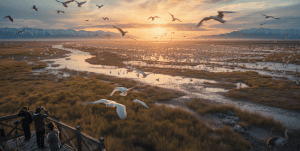
This unique ecosystem serves as a vital stopover and breeding ground for waterfowl and shorebirds. The refuge supports over 250 bird species, making it one of the most biologically diverse birding destinations in the Western United States. The combination of seasonal flooding, naturally managed marshes, and protected habitat creates ideal conditions for birds during migration and breeding seasons.

Location and Getting There
Bear River Migratory Bird Refuge is located in the northern Great Salt Lake region, approximately 30 miles west of Logan, Utah, and 80 miles north of Salt Lake City. The refuge headquarters and visitor center are situated near the communities of Brigham City and Tremonton in Box Elder County.
Directions
From Salt Lake City: Take I-15 North toward Ogden, then continue north toward Brigham City. Exit toward Brigham City and follow signs to the refuge. The drive takes approximately 1.5 hours.
From Logan: Head west on U.S. Route 89 toward Tremonton, then follow local roads to the refuge entrance. The drive takes approximately 30 minutes.
Address: 848 South 1500 West, Brigham City, UT 84302
Getting Around the Refuge
Once at the refuge, the main Auto Tour Loop provides the primary access route for visitors. This 12-mile loop road winds through different habitat types and offers numerous pullouts for viewing and photography. Walking trails branch from the auto tour route for more immersive experiences.
History and Conservation
The Bear River Migratory Bird Refuge has a remarkable story of restoration and conservation. Designated as a federal bird refuge in 1928, the original 64,000-acre wetland system was transformed into productive habitat managed specifically for wildlife.
Past Challenges
The refuge faced significant threats over the decades. Rising waters from the Great Salt Lake threatened the refuge’s infrastructure and habitat in the 1980s, leading to complex engineering and management decisions. The ecosystem’s health depends on maintaining proper water levels, controlling invasive plants, and managing agricultural and urban water demands.
Modern Conservation Efforts
Today, the refuge operates under adaptive management principles. Fish and Wildlife Service staff use water control systems to regulate water levels across different habitat units, creating ideal conditions for nesting and migrating birds. Partnerships with local communities, universities, and conservation organizations help support ongoing research and habitat improvements.
The refuge plays a crucial role in regional conservation goals and contributes significantly to international bird conservation efforts through the Pacific Flyway partnership.
Wildlife and Bird Species
Waterfowl and Shorebirds
The refuge supports extraordinary numbers of waterfowl. Pintails, wigeon, mallards, and gadwalls are abundant during migration periods. Lesser scaup and canvasback ducks also frequent the refuge, particularly during fall migration.
Shorebirds including avocets, stilts, and phalaropes inhabit the shallow marsh edges. Sandpipers of multiple species probe the mudflats during spring and fall, feeding on aquatic invertebrates.
Raptors and Predators
Raptors use the refuge extensively. Bald eagles visit during winter months, while red-tailed hawks, marsh hawks, and rough-legged hawks patrol year-round. The refuge’s abundant bird populations attract these skilled hunters.
Pelicans and Cormorants
The refuge provides important breeding habitat for American white pelicans and double-crested cormorants. During breeding season, you may observe these birds nesting in large colonies on refuge islands.
Other Wildlife
Beyond birds, the refuge supports muskrats, beavers, and coyotes. Occasionally, visitors spot white-tailed deer along refuge roadsides during dawn and dusk.
Bird Species You Can See
Waterfowl
- Mallard
- Pintail
- American wigeon
- Gadwall
- Canvasback
- Lesser scaup
- Green-winged teal
- Cinnamon teal
Shorebirds
- American avocet
- Black-necked stilt
- Snowy plover
- Killdeer
- Semipalmated sandpiper
- Least sandpiper
- Long-billed dowitcher
- Red-necked phalarope
Raptors
- Bald eagle
- Red-tailed hawk
- Marsh hawk
- Rough-legged hawk
- American kestrel
Wading Birds
- Great blue heron
- Great egret
- Snowy egret
- Cattle egret
- Black-crowned night heron
Other Notable Species
- American white pelican
- Double-crested cormorant
- American coot
- Common grackle
- Marsh wren
Migration Seasons and Best Time to Visit
Spring Migration (March to May)
Spring represents the most active migration period at the refuge. Waterfowl and shorebirds arrive from southern wintering grounds, filling the marshes and open water areas. April and early May offer peak viewing opportunities with the greatest species diversity.
During spring, you’ll observe dramatic behavior including courtship displays, territorial interactions, and pair formation. Water levels are typically high following snowmelt from surrounding mountains.
Summer (June to August)
Summer brings resident breeding birds. Nesting colonies of pelicans and cormorants are most active during early summer. Some species rear young through August. Water levels may fluctuate depending on management practices and regional precipitation.
Fall Migration (August to October)
Fall migration peaks in September and October. Shorebirds depart first, while waterfowl follow through October and November. Fall can be an excellent time to observe species diversity with lower crowds than spring.
Winter (November to February)
Winter transforms the refuge into a crucial habitat for resident and cold-weather species. Bald eagles congregate here to feed on waterfowl. Many sections remain accessible, though some areas close for management purposes.
Recommended Visiting Months
For maximum birding diversity: April, May, September, and October offer the best combination of species variety and accessibility.
For solitude: December through February provide quieter conditions, though cold temperatures require preparation.
For photography: Early morning light in May and September creates ideal conditions with active birds and excellent lighting.
Best Time to Visit the Refuge
Time of Day
Early morning (one hour after sunrise through mid-morning) is ideal for wildlife observation. Birds are most active during cooler temperatures and reduced human activity.
Afternoon visits (after 3 PM) can be productive during summer months when morning heat drives birds to deeper water.
What to Bring
- Binoculars (essential for bird identification)
- Bird field guide or birding app
- Camera with telephoto lens for photography
- Water and snacks
- Sunscreen and hat
- Insect repellent (spring and summer)
- Warm clothing and layers (conditions vary seasonally)
Physical Requirements
The Auto Tour Loop is flat and accessible from vehicles. Walking trails vary in difficulty from easy quarter-mile strolls to moderate 2-3 mile hikes. Most trails are well-maintained but can be muddy during wet seasons.
Visitor Center and Facilities
Bear River Migratory Bird Refuge Visitor Center
The refuge visitor center provides orientation, educational displays, and visitor resources. Hours vary seasonally, so confirm current hours before visiting.
Visitor Center Features:
- Educational exhibits about refuge ecology and bird species
- Restrooms
- Visitor information and maps
- Gift shop with field guides and birding materials
- Parking area
Amenities and Services
- Free admission (though donations support refuge programs)
- Picnic areas at designated locations
- Accessible facilities for visitors with mobility limitations
- Cell service is limited; download maps beforehand
Lodging and Food
No lodging is available within the refuge. Nearby communities offer hotels, restaurants, and services:
Brigham City (nearest town, approximately 20 minutes)
- Hotels and motels
- Restaurants and cafes
- Gas stations and grocery stores
Tremonton (approximately 25 minutes)
- Additional lodging options
- Dining establishments
Logan (approximately 45 minutes)
- Full range of accommodations
- University town amenities
Auto Tour Route
12-Mile Loop Overview
The refuge’s primary Auto Tour Loop provides vehicle access through key habitat areas. This is the main way most visitors explore the refuge.
Loop Duration: 1-3 hours depending on stops and wildlife activity
Road Conditions: Gravel surface; accessible to standard vehicles year-round (conditions may vary seasonally)
Key Stops and Viewing Areas
North Arm: The northern section passes through open water and marsh habitat. This area is excellent for viewing pelicans, cormorants, and diving ducks.
East Arm: The eastern portion winds through shallow marshes ideal for shorebirds and dabbling ducks. Numerous pullouts provide viewing opportunities.
West Arm: The western section passes through deeper water and larger open areas. This is an excellent location for observing raptors and larger waterfowl.
Viewpoints and Photography Opportunities
Approximately 10-12 designated pullouts along the loop provide viewing and parking areas. Each pullout offers different habitat perspectives and bird species depending on season and water conditions.
Photography enthusiasts find excellent opportunities from designated areas, though visitors should remain respectful of wildlife and other visitors.
Walking Trails and Hiking
Beyond the auto tour, several walking trails provide closer encounters with refuge habitats.
Refuge Trails
Pintail Nature Trail (0.5 miles) Easy walk through marsh edge habitat. Ideal for beginning birders and families. Approximately 20-30 minutes.
Scenic Loop Trail (1.5 miles) Moderate trail with more extensive habitat viewing. Passes through grassland, marsh, and open water edges. Allow 45-60 minutes.
Refuge Management Trail (2 miles) Moderate to more challenging trail accessing less-used areas. Provides solitude and potential for viewing less-common species. Allow 1-1.5 hours.
Trail Conditions and Safety
Trails can be muddy during wet seasons. Wear appropriate footwear. Some sections flood seasonally, so confirm trail status at the visitor center. Stay on marked trails to protect habitat and ensure your safety.
Photography and Birdwatching Tips
Equipment for Birdwatching
Essential:
- Quality binoculars (8×42 or 10×42 magnification)
- Bird field guide specific to Western birds
- Notebook for species documentation
- Smartphone birding app (Merlin Bird ID, eBird)
Recommended:
- Spotting scope for distant viewing
- Extended binocular range for waterfowl identification
- Waterproof case for electronics
Photography Equipment
Camera Setup:
- Digital camera with manual mode capability
- Telephoto lens (200-600mm ideally)
- Tripod for stability
- Polarizing filter to reduce water glare
Settings Tips:
- Use fast shutter speed (1/1000 or faster) for moving birds
- Aperture priority mode with f/5.6-f/8 for bird photography
- ISO adjusted for lighting conditions
- Focus tracking for moving subjects
Best Photography Locations
Early morning shoots near water edges provide soft light and active birds. Vehicle positioning from pullouts allows discreet photography. Patient stillness yields better results than movement.
Overcast days reduce harsh shadows and glare on water. Angles that showcase birds against natural backgrounds work better than distant silhouettes.
Birdwatching Best Practices
Ethical Observation:
- Maintain distance from birds (use binoculars/scope instead of approaching)
- Never play call recordings during breeding season
- Keep noise levels low
- Stay on designated routes
- Never block others’ views or access
Species Identification:
- Note field marks carefully before consulting guides
- Consider multiple similar species
- Use photography to document uncertain sightings
- Consult experienced birders for challenging identifications
Recording Sightings:
- Document species, time, location, and numbers
- Contribute observations to eBird
- Share findings responsibly with the birding community
- Report unusual species to refuge staff
Conservation Importance
Pacific Flyway Hub
The Bear River Migratory Bird Refuge serves as a critical hub along the Pacific Flyway, one of the major bird migration routes in North America. Millions of birds depend on the refuge during spring and fall migrations.
Wetland loss throughout the Pacific Flyway has reduced available stopover habitat. The refuge’s protected marshes are increasingly essential for migrating birds needing to rest and refuel during long-distance flights.
Ecosystem Services
Beyond wildlife habitat, the refuge provides important ecosystem services:
- Water filtration: Marsh plants naturally filter and clean water from surrounding agricultural and urban areas
- Flood control: Wetlands absorb and slow water movement, reducing downstream flooding risks
- Carbon storage: Wetland soils store significant carbon, contributing to climate regulation
- Nutrient cycling: Marshes process excess nutrients from surrounding watersheds
Scientific Research
Universities and research institutions use the refuge for long-term ecological studies. Research on bird migration, habitat management, and wetland ecology contributes to broader conservation knowledge and practices.
Community Benefits
The refuge supports local economies through ecotourism and recreation. Birdwatching and wildlife viewing generate spending in nearby communities. Environmental education programs connect residents with nature.
Rules and Regulations for Visitors
General Visitor Rules
- Stay on designated trails and roads
- Do not approach or harass wildlife
- Remove all trash (pack in, pack out)
- No littering of any kind
- Respect closed areas (marked with signage)
- Supervise children and pets at all times
Hunting and Fishing Restrictions
Hunting and fishing are prohibited in most refuge areas. Some seasonal hunting may be permitted in designated zones. Check current regulations with refuge headquarters before your visit.
Vehicle and Access Rules
- Speed limit 25 mph on auto tour loop
- Stay on designated roads
- Park only in marked areas
- No off-road driving
- Accessible routes available; contact visitor center for assistance
Photography and Commercial Use
- Personal photography is permitted
- Commercial photography requires permit
- Commercial filming or drone use requires advance authorization
- Always prioritize wildlife welfare over photo opportunities
Plant and Mineral Collection
- No collection of plants, seeds, rocks, or minerals
- The refuge is protected; all natural materials are protected by law
Prohibited Activities
- No camping overnight
- No pets (except service animals)
- No fireworks or loud music
- No drones without special permit
- No swimming or wading
Preparing for Your Visit
Pre-Visit Planning
Check the Website: Visit the official refuge website for current conditions, hours, and any closures or advisories.
Weather Preparation: Check seasonal weather patterns and prepare appropriate clothing. Early mornings can be cold; afternoons may be warm.
Road Conditions: Confirm vehicle road conditions, especially during winter or after heavy rain.
Duration Planning: Plan 2-4 hours for a meaningful visit. Morning visits allow more time for birding.
What to Know Before You Go
No Food Available: The visitor center does not offer food service. Bring snacks and water.
Limited Amenities: Facilities are basic. The visitor center has restrooms, but other services are minimal.
Weather Exposure: The refuge offers little shade. Bring sunscreen, hat, and water even for short visits.
Insect Activity: Spring and summer bring mosquitoes. Insect repellent is essential.
Water Levels: Seasonal water level changes affect accessible areas and bird species distribution. Ask at the visitor center about current conditions.
First-Time Visitor Tips
Start at the visitor center for orientation and current conditions. Pick up a map and ask staff about recent bird activity and recommended viewing areas. Drive the entire 12-mile loop initially to understand habitat diversity, then return to promising areas on foot.
Plan your first visit for April, May, or September when bird activity peaks and weather is mild. Bring binoculars even if you don’t consider yourself a serious birder—you’ll be amazed by what you can observe.

Nearby Attractions Worth Visiting
Antelope Island State Park
Located south of the refuge on the Great Salt Lake, Antelope Island offers scenic driving and hiking with views of the Wasatch Mountains. The island supports herds of bison and antelope along with over 200 bird species.
Distance from Refuge: Approximately 40 miles south
Highlights: Scenic byway driving, hiking trails, wildlife viewing, photography opportunities, visitor facilities
Great Salt Lake State Park
Multiple areas around the Great Salt Lake provide additional access to this unique ecosystem. Promontory Point offers scenic views and historical significance.
Distance from Refuge: Varies (5-30 miles depending on specific location)
Highlights: Water access, scenic overlooks, picnic areas, historical sites
Logan Canyon
Northeast of the refuge, Logan Canyon provides scenic mountain driving, hiking, and fishing opportunities. The canyon road becomes especially beautiful during fall foliage season.
Distance from Refuge: Approximately 35 miles northeast
Highlights: Mountain scenery, hiking trails, river access, seasonal beauty
Brigham City Museum and Gallery
Located in nearby Brigham City, this small museum features local history, Native American artifacts, and rotating art exhibitions.
Distance from Refuge: Approximately 20 miles
Highlights: Local history, art exhibitions, cultural experiences
Golden Spike National Historic Site
Historic site commemorating the completion of the first Transcontinental Railroad near Promontory, Utah.
Distance from Refuge: Approximately 30 miles north
Highlights: Historical significance, museum exhibits, occasional train reenactments, visitor center
Frequently Asked Questions
What is the entrance fee?
The refuge does not charge admission. The refuge is free to visit. However, donations support refuge programs and conservation efforts.
Are pets allowed?
Pets are not permitted on the refuge except for certified service animals. Leave your pets at home or make pet care arrangements before visiting.
Is the refuge accessible for people with disabilities?
The auto tour loop is accessible to visitors with mobility limitations. Some walking trails may be difficult. Contact the visitor center to discuss accessibility needs.
What is the best time to visit?
April, May, September, and October offer the best combination of weather, bird species diversity, and accessibility. Visit early morning for optimal wildlife viewing.
Do I need a permit to photograph here?
Personal photography is permitted without a permit. Commercial photography, filming, or drone use requires advance authorization from refuge headquarters.
Can I bring binoculars if I don’t have my own?
The visitor center may have limited binoculars available to borrow. Call ahead to confirm availability. Consider purchasing affordable binoculars before your visit.
How long does a typical visit take?
Plan 2-3 hours for a meaningful visit. Driving the entire auto loop takes 1-2 hours. Add time for walking trails and detailed bird observation as desired.
Are there ranger-led tours available?
Check with the visitor center about guided tours, nature walks, or educational programs. Availability varies seasonally.
What should I do if I see an injured bird?
Contact the visitor center or refuge headquarters. Do not attempt to capture the bird. Staff can assess the situation and determine appropriate care.
Is birdwatching difficult for beginners?
Absolutely not. Many birds at the refuge are large, visible, and relatively easy to identify. Begin with common waterfowl and shorebirds. Download the Merlin Bird ID app for portable identification help.
Can I visit during winter?
Yes, the refuge is open year-round. Winter brings bald eagles and different species. Dress warmly and confirm trail and road accessibility, as some areas close seasonally.
Where can I get more specific birding information?
Visit the official refuge website, consult local birding guides, or contact the visitor center. The Merlin Bird ID app and eBird database provide species occurrence information.
Recommended Books for Learning More
The Bird Life of Great Salt Lake: The Life History, Ecology and Population Trends of the California Gulls, White Pelicans, Double-crested Cormorants, and Other Birds of the Bear River Migratory Bird Refuge
By William Behle, University of Utah Press
This comprehensive scientific work examines bird species that inhabit the Great Salt Lake region and the Bear River refuge system. Behle provides detailed life history information, ecological relationships, and population data spanning decades of observation. The book is essential for readers seeking deep scientific understanding of refuge bird ecology and species interactions. Ideal for academic researchers, serious birders, and ornithology students. Readers gain insight into how different species use the refuge’s ecosystem and how environmental factors affect bird populations.

Bringing Back The Bear: How a Community Rescued Bear River Migratory Bird Refuge
By Al Trout, published 2022
This recent narrative history tells the story of the refuge’s restoration following near-destruction from rising Great Salt Lake waters. Trout chronicles the dedicated volunteers, wildlife managers, and community members who mobilized to save the 64,000-acre refuge. The book provides compelling storytelling about conservation efforts, community engagement, and ecosystem restoration. Perfect for readers interested in conservation history and community-driven environmental solutions. Readers understand the refuge’s recent challenges and the human effort behind its recovery and current management.

Conclusion
The Bear River Migratory Bird Refuge represents one of North America’s most important natural areas. This 64,500-acre wetland complex provides essential habitat for millions of migratory birds, supports diverse wildlife, and serves local communities through recreation and education.
Whether you visit for serious birdwatching, wildlife photography, nature study, or simply appreciating natural beauty, the refuge offers memorable experiences. The combination of accessible viewing opportunities, outstanding biodiversity, and dedicated conservation efforts makes it a destination worth exploring.
Plan your visit during peak migration seasons (April-May or September-October) for the best experience. Arrive early, bring binoculars, and expect to spend at least a few hours exploring the auto tour loop and walking trails. Even casual visitors will appreciate the abundance of wildlife and natural beauty.
The refuge’s story of restoration and community conservation also inspires hope about our ability to protect and restore critical ecosystems. By visiting responsibly and supporting the refuge’s mission, you become part of this ongoing conservation effort.



