
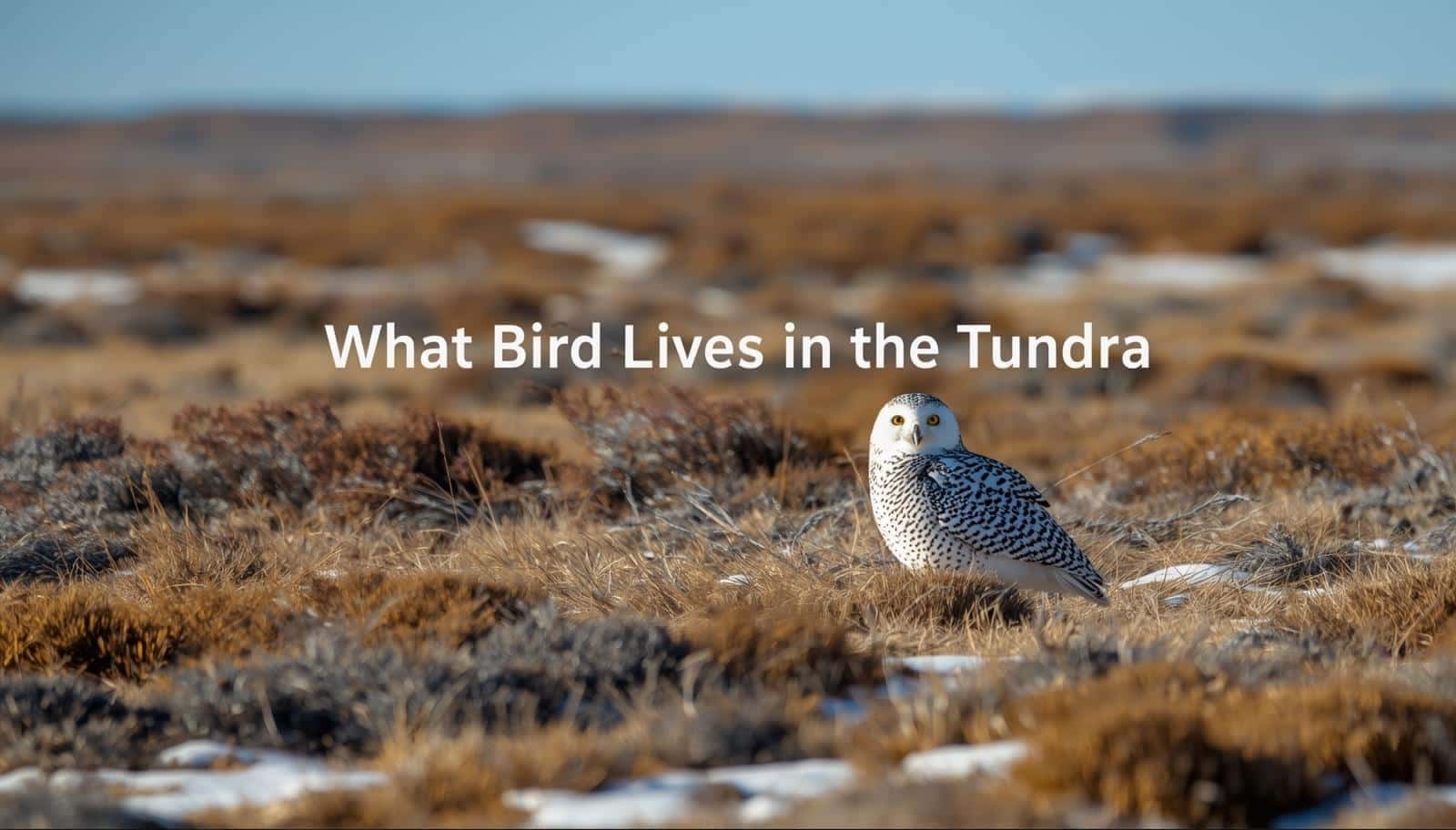
Have you ever wondered What Bird Lives in the Tundra and can survive in one of the coldest and harshest places on Earth—the tundra? You might think it’s impossible for any bird to live in such freezing conditions, but nature has some incredible surprises.
Discovering What Bird Lives in the Tundra will change the way you see these icy landscapes. Keep reading, and you’ll uncover fascinating facts about these amazing creatures that call the tundra their home. Your curiosity is about to be rewarded!

Credit: birdfact.com
Arctic Tundra Habitat
The Arctic tundra is a cold and dry region with few trees. It is home to special birds that survive in harsh conditions.
These birds have adapted to live on the frozen land and find food in the short summer season.
Climate And Landscape
The Arctic tundra has very cold temperatures and strong winds. Snow covers the ground for most of the year. The land is flat with low plants like moss and shrubs.
- Average temperature can drop below -30°C in winter
- Permafrost keeps the soil frozen year-round
- Summer lasts only a few weeks with temperatures up to 10°C
- Strong winds make it feel even colder
- Sun shines 24 hours in summer and is absent in winter
Seasonal Changes
The Arctic tundra changes a lot between summer and winter. Birds must change their habits to survive these seasons.
| Season | Temperature | Daylight | Bird Behavior |
| Winter | -40°C to -10°C | 0 hours | Many birds migrate south |
| Summer | 0°C to 10°C | 24 hours | Birds nest and feed young |
Birds Adapted To The Cold
Many birds live in the tundra, a cold and harsh place. They have special traits to survive freezing temperatures.
These birds use their bodies and behavior to stay warm and find food in the snow and ice.
Physical Adaptations
Tundra birds have thick feathers that keep heat close to their bodies. Their feathers are dense and often cover their legs and feet.
Some birds have small bodies and short legs to reduce heat loss. Others have special fat layers under their skin for insulation.
- Thick, dense feathers trap body heat
- Feathers cover legs and feet to avoid frostbite
- Shorter body parts reduce heat loss
- Fat layers provide extra warmth
Behavioral Traits
Tundra birds often huddle together to share warmth during cold nights. They also migrate to warmer areas when winter is very harsh.
Some birds change their diet based on food availability. They eat insects, seeds, or small animals to get enough energy.
- Huddle in groups to stay warm
- Migrate to warmer places in winter
- Adapt diet to find food easily
- Use wind and sun for warmth
Common Tundra Birds
The tundra is a cold and harsh place. Many birds live there. These birds have special traits to survive the cold.
We will look at four common tundra birds. These are the Snowy Owl, Arctic Tern, Ptarmigan, and Gyrfalcon.
Snowy Owl
The Snowy Owl is large and mostly white. It blends well with the snow. It hunts small animals like lemmings.
This owl has sharp eyes and ears. It can see and hear prey even in low light.
- Biologists track the prey cycles: “The reproductive success of the Snowy Owl is tied directly to the lemming cycle. Lemmings, a primary food source, experience population booms every three to five years. In ‘lemming years,’ a pair of Snowy Owls may lay as many as 12 eggs, ensuring a huge clutch survives. In ‘bust years,’ they may not breed at all. This tight ecological link makes the Snowy Owl a perfect indicator species for the health of the entire tundra food web.”
Arctic Tern
The Arctic Tern is a small bird with gray and white feathers. It flies long distances every year. This bird migrates from the Arctic to the Antarctic.
- Longest migration of any bird
- Feeds on fish and small sea creatures
- Nests on rocky ground in the tundra
Ptarmigan
Ptarmigans change color with the seasons. They are brown in summer and white in winter. This helps them hide from predators.
| Season | Color |
| Summer | Brown |
| Winter | White |
Gyrfalcon
The Gyrfalcon is the largest falcon in the tundra. It hunts birds and small mammals. Its strong wings help it fly fast.
This bird is a powerful hunter. It uses speed and surprise to catch prey.

Credit: www.allaboutbirds.org
Migratory Patterns
Birds that live in the tundra have special migration habits. They travel long distances to find food and safe places to breed.
These migrations help them survive cold winters and raise their young in better conditions.
Long-distance Travelers
Many tundra birds migrate thousands of miles each year. They fly to warmer regions during winter.
- Some species fly to southern parts of North America.
- Others travel to Central and South America.
- A few head to coastal areas where food is easier to find.
Breeding Grounds
Tundra birds return to cold regions to breed in spring and summer. The long daylight hours help them find food for their chicks.
| Bird Species | Breeding Location | Time of Year |
| Snowy Owl | Arctic Tundra | May to August |
| Sandhill Crane | North American Tundra | June to July |
| Lapland Longspur | Alaska and Canada | June to August |
- Ecologists explain the summer boom: “Birds choose the Arctic Tundra as a breeding ground for two reasons: First, the long hours of daylight (up to 24 hours) allow parents maximum foraging time, reducing the downtime when chicks are unfed. Second, the vast, open landscape provides relative safety from terrestrial predators like raccoons and skunks, which are far more common in southern forests, dramatically increasing the survival rate of the nestlings.”
Feeding Strategies
Birds living in the tundra have special ways to find and eat food. The cold and harsh environment means food is not always easy to get.
These birds use smart feeding strategies to survive the tough conditions in the tundra.
Hunting Techniques
Tundra birds use different hunting techniques to catch their prey. They rely on keen eyesight and quick movements.
Some birds wait quietly and watch for small animals. Others fly low over the ground to surprise their prey.
- Perching high to scan for movement
- Hovering to spot prey before diving
- Walking slowly to sneak up on insects
Diet Variety
Tundra birds eat a wide range of foods to get enough energy. Their diet changes with the seasons and food availability.
They eat insects, small mammals, fish, and even plants. This variety helps them stay healthy in a tough environment.
- Insects like flies and beetles
- Small rodents and lemmings
- Fish from nearby water bodies
- Seeds and berries during summer
Nesting And Reproduction
Birds living in the tundra have special ways to nest and raise their young. The cold, open land needs strong, smart birds to survive.
They build nests in safe places and take care of their eggs and chicks carefully. This helps their babies grow in a tough environment.
Nest Locations
Tundra birds choose nest spots that protect eggs from cold wind and predators. Many nests are on the ground in hidden areas.
Some birds use small plants or rocks to hide their nests. Others dig shallow holes or make nests in low shrubs.
- Ground nests are common for warmth and camouflage
- Some nests are made near water for food access
- Low vegetation helps block harsh winds
Raising Chicks
Once the eggs hatch, parent birds keep their chicks warm. They bring food and stay close to protect them.
Chicks grow fast and learn to find food quickly. Parents teach them to fly and stay safe in the tundra.
- Parents share feeding duties evenly
- Chicks stay hidden until they can fly
- Learning to fly is key for survival
Conservation Challenges
Birds that live in the tundra face many threats. These threats make it hard for them to survive and thrive.
Conservation efforts must focus on key challenges. Understanding these problems helps protect tundra bird species.
Climate Change Impact
Climate change warms the tundra. This change affects bird habitats and food sources.
- Melting ice reduces nesting areas
- Shifts in insect populations limit food
- Earlier snowmelt changes breeding times
- New predators move into the tundra
Human Activities
Human actions harm tundra birds in many ways. Pollution and development are big problems.
| Human Activity | Effect on Birds |
| Oil and gas drilling | Disturbs nesting sites |
| Mining operations | Pollutes water and soil |
| Off-road vehicles | Damages tundra vegetation |
| Climate pollution | Speeds up warming |

Credit: www.allaboutbirds.org
Birdwatching In The Tundra
The tundra is a cold, treeless region with unique birds. Birdwatching here shows species found nowhere else. It offers a quiet, natural experience.
Many birds live in the tundra during the warm months. They come to nest and feed before flying south again. Watching them needs some planning.
Best Seasons To Visit
Birds arrive in the tundra in late spring. Summer is the peak time to see many species. By autumn, most birds leave for warmer places.
- Late May to early July: Best for nesting birds
- July and August: Great for seeing chicks and adult birds
- Early September: Some birds start migration south
Tips For Spotting Birds
Birdwatching in the tundra needs patience and care. Birds can hide in bushes or fly quickly. Using good tools and following simple rules helps.
| Tip | Description |
| Use binoculars | See birds clearly from a distance without disturbing them |
| Wear neutral colors | Blend with the environment to avoid scaring birds away |
| Move slowly | Approach birds quietly to increase chances of sightings |
| Check early morning | Birds are more active and easier to spot at dawn |
| Learn bird calls | Recognize sounds to find hidden birds |
Frequently Asked Questions
What Bird Species Are Common In The Tundra?
Common tundra birds include the Arctic tern, snowy owl, and ptarmigan. They are adapted to cold climates and scarce food.
How Do Tundra Birds Survive Extreme Cold?
Tundra birds have thick feathers and fat layers for insulation. They also migrate or hibernate during the coldest months.
Why Do Some Birds Migrate From The Tundra?
Birds migrate to find food and better breeding conditions. The tundra has limited resources during winter months.
What Do Tundra Birds Eat?
Tundra birds feed on insects, small mammals, berries, and fish. Their diet varies by season and availability.
Conclusion
Birds in the tundra are truly fascinating creatures. They adapt to harsh conditions. Their survival skills are impressive. From the snowy owl to the arctic tern, each species thrives uniquely. These birds play important roles in the ecosystem. They maintain the balance of nature.
Observing them offers valuable insights. The tundra’s vast, chilly expanse is their home. Understanding these birds helps us appreciate nature’s wonders. It shows how life endures in extreme places. Next time you think of the tundra, remember its resilient birds.
They are more than just survivors. They are a testament to nature’s incredible adaptability.



