
Have you ever wondered What is a Mountain Jay Bird? If you love nature and want to learn about unique wildlife, this mysterious bird will capture your attention.
The Mountain Jay is not just any bird—it has fascinating habits and a striking look that you won’t forget. You’ll discover everything you need to know about this amazing bird. Keep reading, and you might even find yourself spotting one on your next outdoor adventure!
Mountain Jay Basics
The Mountain Jay is a bird found in high mountain areas. It is known for its lively behavior and unique calls.
This bird is part of the crow family and often lives in cold, forested regions. It plays an important role in its ecosystem.
- Taxonomists clarify common names: “The term ‘Mountain Jay’ is often a colloquial nickname rather than a specific species. In North America, this name usually refers to the Clark’s Nutcracker (Nucifraga columbiana) or the Canada Jay (Perisoreus canadensis), both of which are gray, jay-like birds found in high-altitude conifer forests. In Europe and Asia, the bird filling this exact ecological niche—eating pine seeds in mountain forests—is the Spotted Nutcracker (Nucifraga caryocatactes).”
Physical Features
The Mountain Jay has a medium size, about 12 inches long. It has strong legs and a sharp beak for finding food.
Its feathers are mostly gray with some white and black markings. The bird’s eyes are dark and alert.
- Length: around 12 inches (30 cm)
- Feather color: gray, white, and black
- Strong legs for hopping on branches
- Sharp, pointed beak
- Dark eyes
Habitat And Range
The Mountain Jay lives in mountain forests and rocky areas. It prefers places with pine and fir trees.
This bird is found in parts of Europe and Asia. It lives mostly at high altitudes, above 3,000 feet.
- Mountain forests with pine and fir trees
- Rocky mountain slopes
- High altitude areas above 3,000 feet (900 meters)
- Regions in Europe and Asia

Credit: www.allaboutbirds.org
Behavior And Diet
The Mountain Jay bird is a lively and curious species found in high-altitude forests. Its behavior and diet help it survive in tough mountain environments.
This bird is known for its social nature and varied feeding habits. It adapts its diet based on the season and food availability.
Feeding Habits
The Mountain Jay eats many types of food. It mainly feeds on insects, seeds, and berries. This variety helps it get enough energy year-round.
- Insects such as beetles and caterpillars
- Seeds from pine cones and other trees
- Wild berries and small fruits
- Occasionally small reptiles or eggs
Social Behavior
Mountain Jays live in small groups or pairs. They communicate with loud calls and have strong bonds with other birds in their group.
| Social Behavior | Description |
|---|---|
| Group Size | Small groups or pairs |
| Communication | Loud calls to stay in touch |
| Territory | Defend small areas during breeding |
| Cooperation | Help each other find food and watch for danger |
Breeding And Nesting
The Mountain Jay bird has unique breeding and nesting habits. These behaviors help the species survive in mountain regions. Understanding these habits gives us a glimpse into their life cycle and care for their young.
Breeding season usually starts in early spring. During this time, birds prepare to find mates and build nests for their offspring.
Mating Rituals
Mountain Jays use different ways to attract mates. They show off bright feathers and sing songs. These actions help them stand out to potential partners.
- The male performs a special dance to catch attention.
- Both birds call to each other with soft, clear sounds.
- Pairs stay close and preen each other to build trust.
- They often mate for life, forming strong bonds.
Nest Characteristics
Mountain Jay nests are well-hidden and carefully built. Birds select safe places, often high in pine or fir trees. Nests protect eggs and chicks from cold and predators.
| Nest Feature | Description |
| Material | Twigs, moss, grass, and feathers |
| Shape | Rounded cup shape |
| Location | High branches in dense trees |
| Size | About 15 to 20 cm wide |
| Eggs | 3 to 5 pale blue eggs with spots |
Communication And Calls
The Mountain Jay bird uses different sounds to talk to other birds. Its calls help with warning, finding mates, and keeping in touch.
These birds have many types of calls. Each call has a special meaning for their group or family.
Warning Calls
Mountain Jays make sharp, loud calls to warn about danger. These sounds alert other birds to watch out for predators.
These warning calls are quick and easy to hear. They help the flock stay safe.
Mating Calls
During mating season, Mountain Jays sing soft and repeated calls. These sounds attract potential mates.
These calls show the bird’s strength and health. Strong calls help them find a partner.
Contact Calls
Mountain Jays use contact calls to keep in touch while flying or feeding. These calls are short and clear.
Contact calls help the birds stay together as a group. They reduce the chance of getting lost.
- Warning calls are loud and sharp
- Mating calls are soft and repeated
- Contact calls are short and clear
Role In The Ecosystem
The Mountain Jay bird plays an important role in mountain forests. It helps keep the environment healthy and balanced.
This bird affects many parts of the ecosystem, including plants, insects, and other animals.
Seed Dispersal
Mountain Jays collect and store seeds in various places. Some seeds grow into new plants, helping the forest grow.
- They bury pine nuts and other seeds in the soil.
- Some seeds are forgotten and sprout into trees.
- This helps forests spread and renew.
Pest Control
The Mountain Jay eats many insects and small pests. This helps protect trees and plants from damage.
By reducing harmful insects, the bird supports healthy plant life and forest growth.
Food Source For Predators
Mountain Jays are prey for larger animals. They provide food for hawks, owls, and other predators.
| Predator | Relation to Mountain Jay |
| Hawk | Hunts Mountain Jays for food |
| Owl | Preys on Mountain Jays at night |
| Fox | May catch Mountain Jays on ground |
Nesting And Habitat Impact
Mountain Jays build nests in trees and shrubs. Their nesting habits affect plant growth and provide shelter for other animals.
Their nests create safe spots for small insects and animals. They also help spread nutrients through fallen leaves and nest materials.

Credit: natureinnovato.com
Conservation Status
The Mountain Jay Bird is a unique bird found in mountain forests. Its conservation status shows how safe or at risk it is in the wild.
Understanding its status helps protect the bird and its home. It also guides efforts to keep the species healthy.
Current Conservation Status
The Mountain Jay Bird is listed as a species of least concern. This means it is not in immediate danger of extinction.
Populations are stable in many areas, but some local groups face threats from habitat loss and climate change.
Threats To The Mountain Jay Bird
Mountain Jay Birds lose habitat due to logging and land development. This reduces their places to live and find food.
Climate change also affects the mountain forests. Changes in weather can harm the bird’s food supply and nesting sites.
- Deforestation reduces forest areas
- Land development fragments habitats
- Climate shifts affect food availability
- Human activities disturb nesting zones
Conservation Efforts
Protected areas help keep the Mountain Jay Bird safe. These areas limit human activity and preserve natural forests.
Organizations monitor populations and study their needs. This helps create plans for long-term survival.
- Establishing nature reserves
- Monitoring bird populations
- Researching habitat needs
- Raising awareness about threats
Interesting Mountain Jay Facts
The Mountain Jay is a bird that lives in high mountain areas. It is known for its beautiful colors and smart behavior. People enjoy watching this bird in forests and rocky places.
This bird plays an important role in the mountain ecosystem. It helps spread seeds and keeps the insect population balanced. Learning about the Mountain Jay can show us how special nature is.
Appearance And Colors
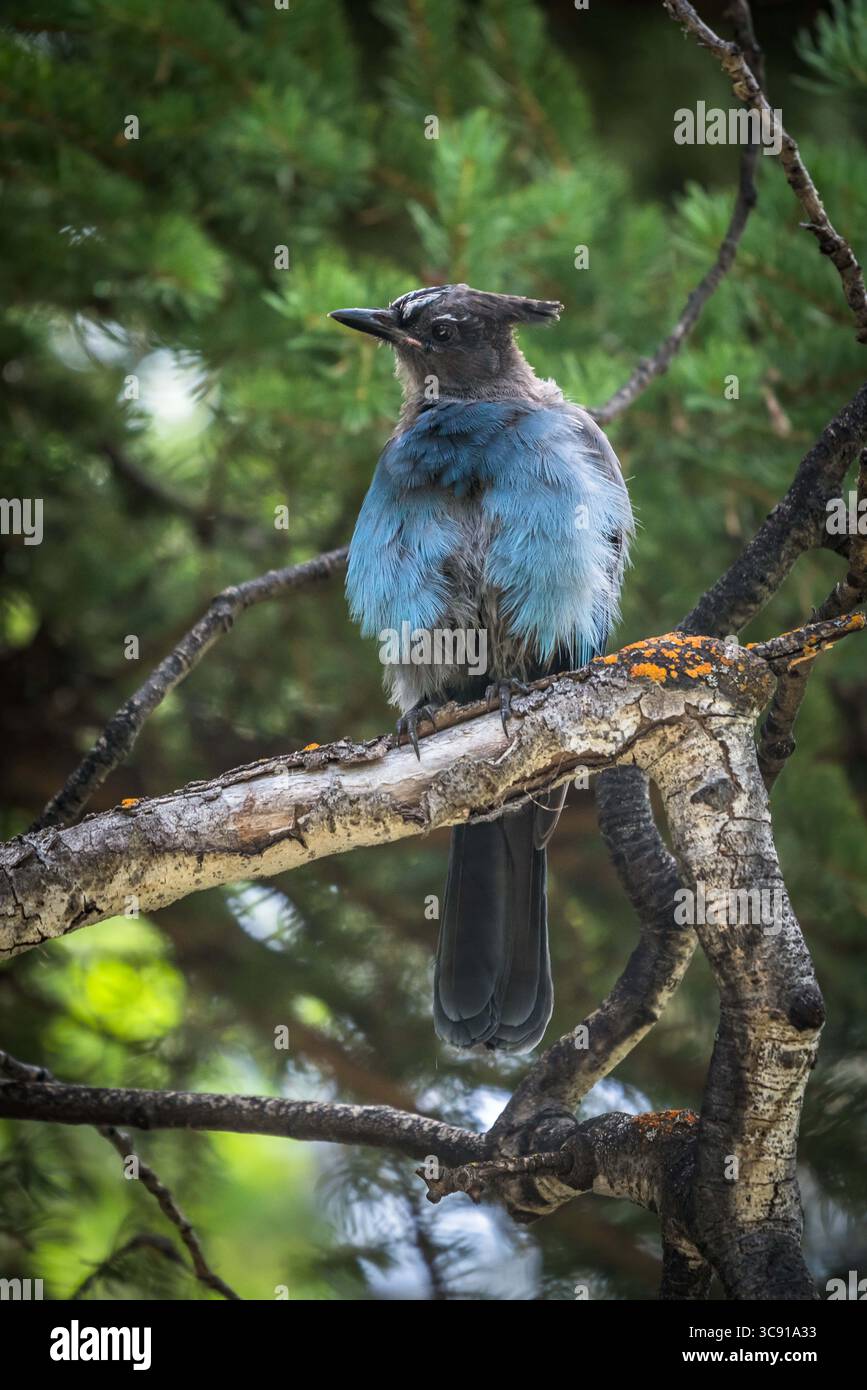
The Mountain Jay has a mix of blue, gray, and white feathers. Its bright blue wings and tail make it easy to spot. The bird’s head is usually gray with a small crest on top.
Habitat And Range
This bird lives mostly in cold mountain forests. It prefers areas with pine and fir trees. You can find Mountain Jays in parts of Europe and Asia, often at high altitudes.
- Physiologists explain mountain survival: “Birds that reside permanently at high altitudes, such as the ‘mountain jays’ (Nutcrackers and Canada Jays), possess specialized hemoglobin with a higher oxygen affinity. This allows them to extract oxygen more efficiently from the thin mountain air. Additionally, they have denser plumage and a metabolic rate adjusted to maintain body heat during freezing alpine nights without needing to migrate to lower elevations.”
Diet And Feeding Habits
The Mountain Jay eats many types of food. It eats seeds, berries, insects, and small animals. It is clever at finding food even in winter when it is hard to find meals.
- Seeds from pine and fir cones
- Various berries and fruits
- Insects like beetles and caterpillars
- Occasionally small reptiles or eggs
Behavior And Social Life
Mountain Jays are social birds. They live in small groups or pairs. They use calls and sounds to talk to each other. These birds are also known for storing food in hidden spots.
| Behavior | Description |
| Social Structure | Live in pairs or small groups |
| Communication | Use loud calls and whistles |
| Food Storage | Hide food to eat later |
| Flight | Strong and direct, good for mountain flying |
Mountain Jays help plants grow by spreading seeds. They eat insects that can harm trees. This bird keeps the mountain forest healthy and balanced. Their presence shows a healthy environment.
Did You Know? Mountain Jays can remember where they hide food for months. This helps them survive harsh winters.
Ethologists study animal memory: “The spatial memory of mountain-dwelling corvids like the Clark’s Nutcracker is legendary. Research shows they can cache up to 33,000 pine seeds in a single season and recover them with high accuracy months later, even when buried under snow. This ability is linked to an enlarged hippocampus, the part of the brain responsible for spatial memory, which actually grows in volume during the fall caching season.”
Credit: www.alamy.com
Frequently Asked Questions
What Does A Mountain Jay Bird Look Like?
The Mountain Jay is medium-sized with grayish-blue feathers and a distinctive crest. It has bright eyes and a strong beak. This bird’s plumage helps it blend in with mountain forests.
Where Do Mountain Jay Birds Live?
Mountain Jays live in high-altitude forests across Europe and Asia. They prefer coniferous woodlands, especially in mountainous regions with cold climates and dense tree cover.
What Does A Mountain Jay Bird Eat?
Mountain Jays primarily eat insects, seeds, nuts, and berries. They are known to store food for winter and forage actively throughout the year.
How Do Mountain Jay Birds Communicate?
Mountain Jays use a variety of calls including harsh, chattering sounds. Their vocalizations help them stay in contact and warn about predators.
Conclusion
The Mountain Jay Bird is a fascinating creature. Its vibrant colors captivate bird lovers. Found in North America’s mountainous regions, it thrives in high altitudes. These birds are known for their intelligence and social nature. They communicate using various calls and songs.
Observing a Mountain Jay can be a delightful experience. It offers a glimpse into nature’s beauty. Protecting their habitat ensures their future. So, next time you’re in the mountains, watch for these stunning birds. They truly are a joy to behold in the wild.
Happy birdwatching!